
2025.03
Separate issue

2025.03

€ 15
(price Belgium)
€ 22
(price Europe)
€ 30
(price outside Europe)

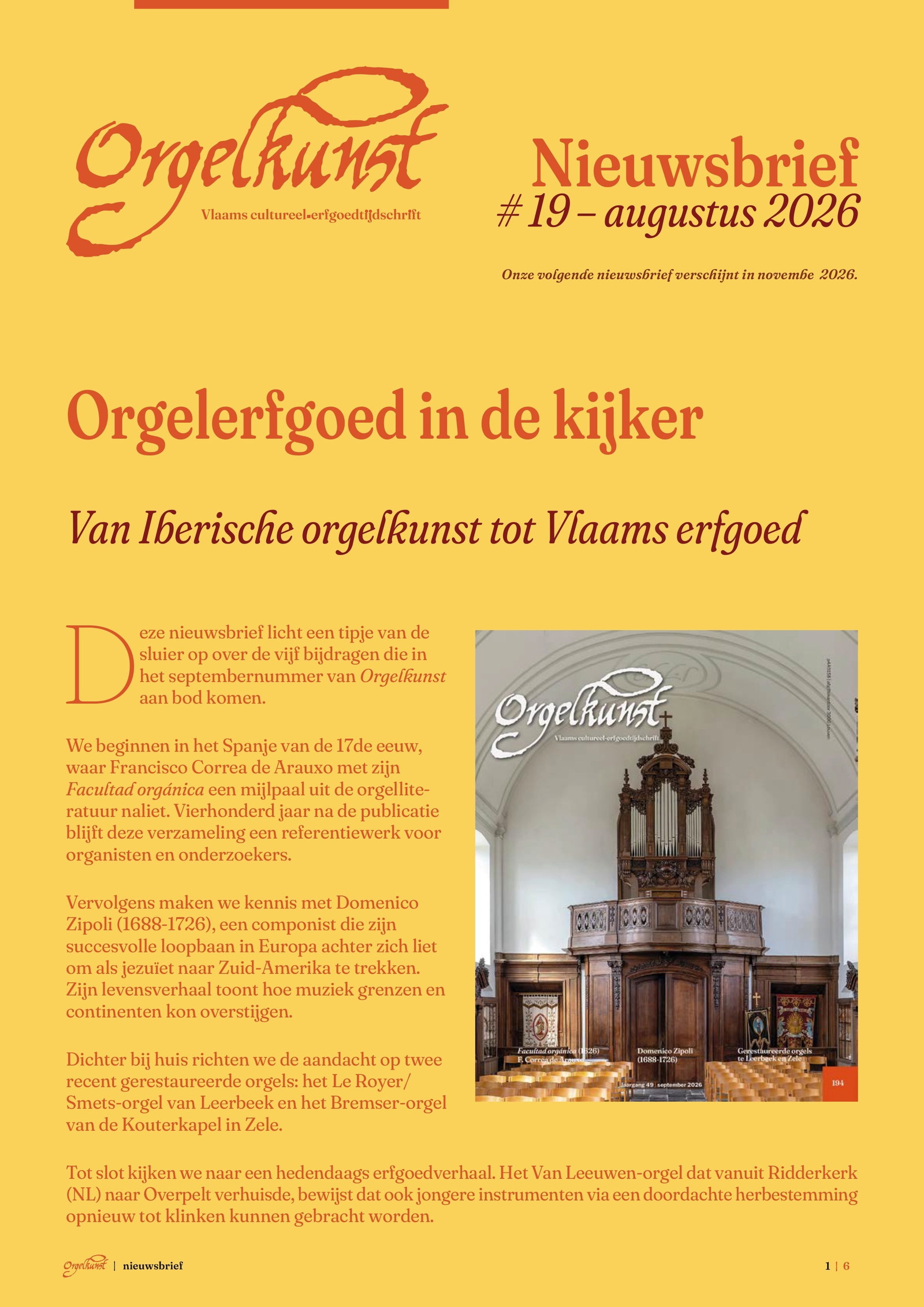
Herman Roelstraete (1925-1985)
Organ builder Joannes Beerens (1742–1808)
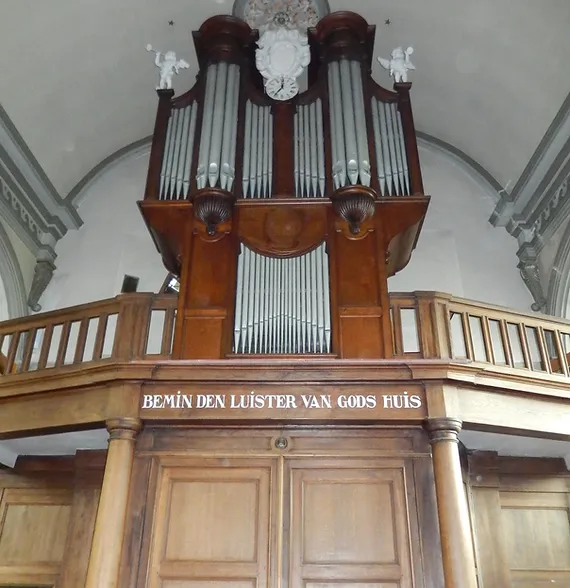
The restored Clerinx organ in Heers (1887)
Developments in restoration policy — 6. Germany
Responses to previous contributions
Reviews | Organ concert agenda | Overview of international organ journals

Order

A generous musician: Herman Roelstraete remembered — “Art is his work, his work is his hobby, his hobby is his art”
Herman Roelstraete (1925-85) was a Flemish composer, organist, and musicologist with a great passion for the organ. He studied with such big names as Flor Peeters and Paul de Maleingrau, and left behind a varied oeuvre of ca. 160 opus-numbers. His organ output is large and stylistically rich. It includes five large sonatas, three modal fantasies, and several sonatinas, often using baroque forms and the old church modes. His music clearly structured, contrapuntally refined, and often meditative or sacred in character, with influences from gregorian chant, the baroque, and neoclassicism, but also modern modality and polytonality. Roelstraete regarded the organ as a spiritual instrument. He played and re-evaluated many historical organs, with particular attention for Flemish organ-builders such as the Anneessens family. He composed not only concert works, but also accessible works for liturgical use. His organ-oeuvre counts as an important part of the Flemish organ-repertoire. After his death, his works were carefully catalogued and partly published, among others through Musica Flandorum.
_________________________________________
Joannes Beerens, organ-builder in Weert (NL)
Joannes Beerens (1742-1808) was a skilled organ-builder, probably trained by the renowned Verbuecken family in Geel. His work follows in the baroque tradition of the Kempen. He himself did not innovate much. This can be explained by his conservative working environment and the political unrest of the time. Initially, he built organs in the region to the south of Weert. However, as the number of commissions that he received declined, in part due to the suppression of religious houses and the French occupations, he had to expand the area of his operations, among other places to Roermond, Hoogstraten, and Oss. His output consists mainly of repairing and rehousing existing instruments. Only a few complete instruments—such as those in Eversel and Wolfsdonk—have been attributed to him, albeit without conclusive evidence. His work best witness to quality and refined craftsmanship, among other things in collaboration with the carpenter Petrus Verscheuren. After his death the Vermeulen family of organ-builders continued his tradition in Weert, up to the end of the 20th century.